
The number migration guide
Number porting preparation: keep the changeover organised
Moving an existing telephone number needs more than a new handset and an intended launch date. Good preparation gives both providers the right information and gives your team a clear plan for the moment calls move across.
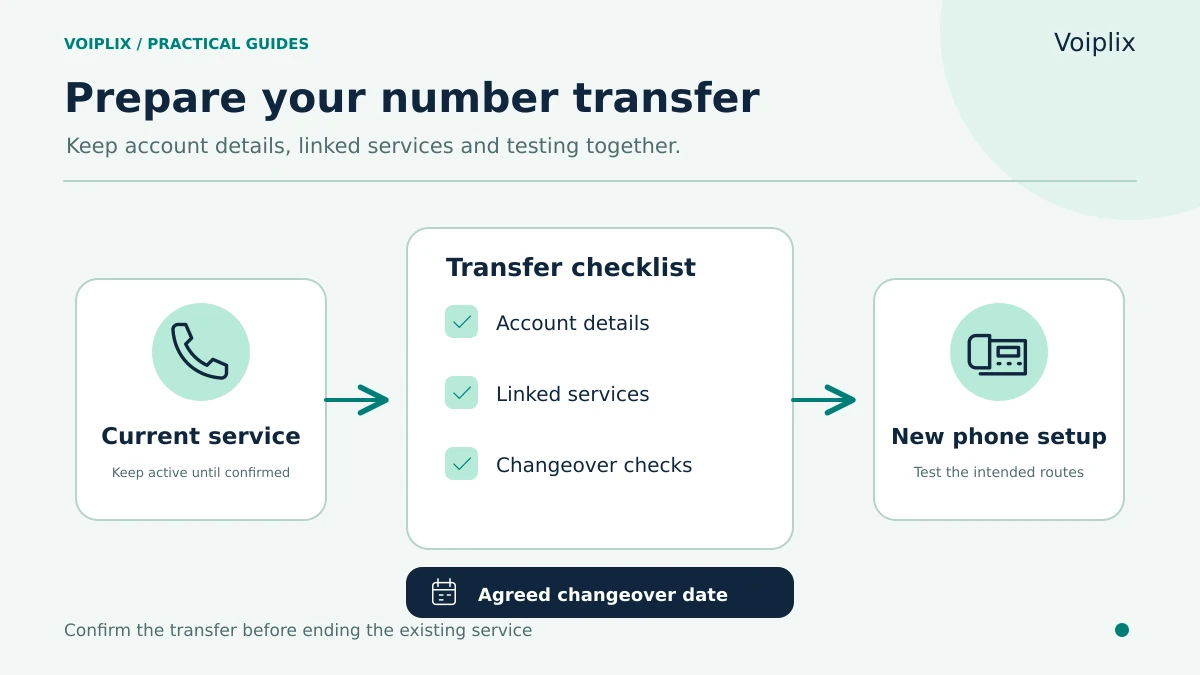
Confirm the right switching process
Start by asking the receiving provider to confirm how your particular service will be moved. A single home telephone number, a business number range and a combined broadband package can involve different practical arrangements. Explain exactly what you want to retain and what you intend to replace.
For residential landline switching, Ofcom's guidance directs customers to their chosen new provider and explains the One Touch Switch process. Ask which process applies to your order; do not assume a business multi-number migration follows the same sequence. Confirm the plan before sending a separate cancellation instruction.
Build an accurate number inventory
Create a list of every number in scope. Include the main published number, direct dial numbers, departments and any numbers that are rarely used but still appear on older material. Check bills and your current phone-system configuration instead of relying solely on what staff remember.
Record the account holder, current provider, installation address and the way each number is used. For a business, nominate someone authorised to approve the move. Ask the receiving provider what evidence it requires and share it through the agreed secure channel. Supply relevant account information without distributing unrelated personal or financial records.
Identify services that depend on the line
Speak to the owners of your broadband, alarm and specialist equipment arrangements before confirming the order. Find out whether moving the telephone service affects a wider package. Record which services should remain active and ask the relevant suppliers to confirm the impact in writing.
This is especially useful when several suppliers or departments are involved. A receptionist may know how calls arrive, finance may hold the contract and an external IT company may manage the equipment. Bring those pieces together early so a number transfer does not become an unexpected replacement project.
Prepare the destination before the number moves
Write down where each number should ring after migration. Include opening hours, voicemail, menu choices, queues and unanswered-call behaviour. Decide whether the existing experience should be reproduced first or whether a redesign is part of the project. Combining both changes can make faults harder to isolate.
Where the provider offers a suitable test arrangement, use it to check the new routing before the port. Confirm that devices are ready, users know how to answer and support contacts are available. Mark configuration items as complete only after the intended user journey has been tried.
Agree a changeover window and a contact plan
Choose a period when the people required for testing can be available. Ask for the expected process, dependencies and escalation route, including how updates will be communicated. Keep the agreed window separate from a promised completion time unless the provider has confirmed that commitment.
Give staff a temporary way to reach the project owner and tell customer-facing teams what to say if a caller reports difficulty. Avoid publishing an alternative number until you have tested it. Maintain a simple change log with the time, observed behaviour and action owner so everyone works from the same information.
Test the number as a customer would
After the move, test calls to the main number and a sample of direct numbers from suitable independent phones. Check ringing destinations, menus, transfers and voicemail. Make outbound calls and confirm the presented number is the one you expect. Include any out-of-hours route that could otherwise go unnoticed until the office closes.
Record exceptions with the calling number, destination, timestamp and a description of what happened, sharing customer data only through approved support channels. Review final and first bills with the commercial owner. Close the migration once routing, access, documentation and any remaining service arrangements have all been checked.
Your questions, answered
A few common questions.
Practical answers before you take the next step.
Should I cancel the old service before moving the number?
Get the receiving provider's instructions first and follow the agreed switching process. A separate cancellation can complicate the intended arrangement, particularly where other services are linked to the account.
How long will number porting take?
The schedule depends on the number type, account arrangement, suppliers involved and whether the order information matches. Ask for a confirmed plan for your specific order rather than relying on a generic timescale.
What should a business test after porting?
Test incoming calls, direct numbers, routing, transfers, voicemail and outbound caller ID. Check opening-hours behaviour and make sure staff know the support route for any remaining issue.
Explore the next step
Keep the useful connections going.
Start with a conversation
Turn the reading into a useful next step.
Tell us about your offices, agents, traffic and existing systems. We’ll help scope the calling service, devices and integrations around your business.