
The wholesale procurement guide
Wholesale voice and VoIP: a buyer’s checklist
A wholesale voice proposal is easier to assess when it is built around your actual traffic and operating model. Put destinations, call patterns, capacity and support expectations on the table before judging the headline rate.
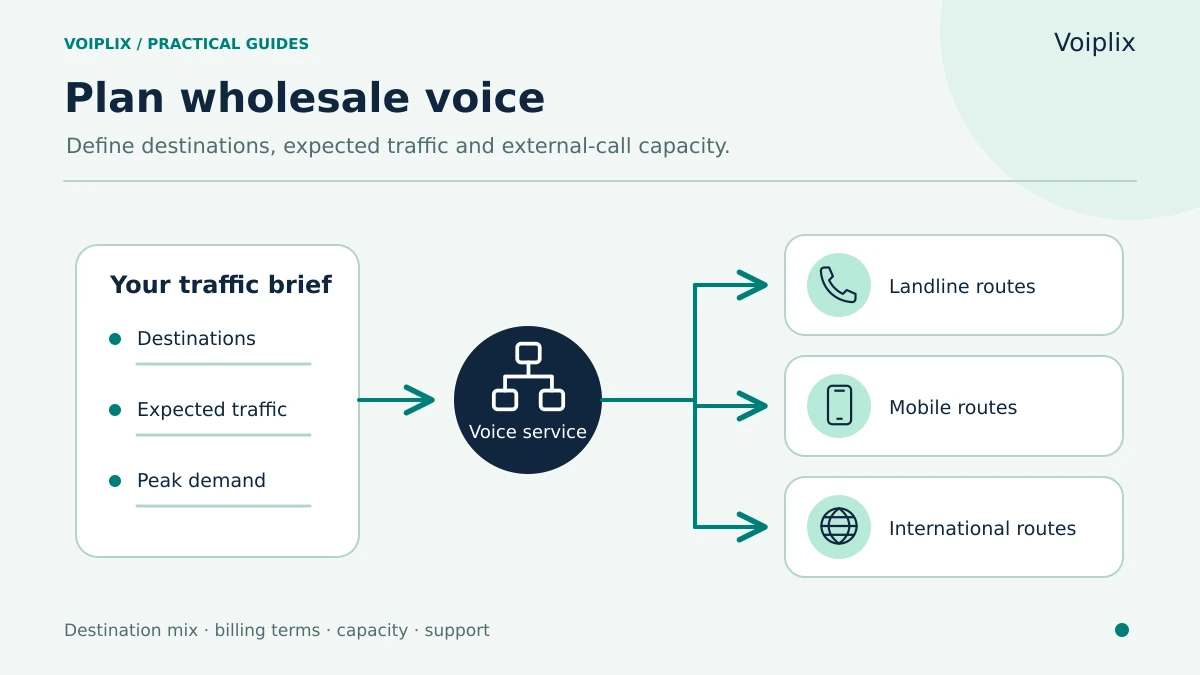
Give suppliers a representative traffic profile
Describe the type of operation, the destinations you call and the balance of inbound and outbound traffic. Include normal and peak periods, average conversation patterns and planned campaign changes. Use a representative sample of usage without sharing unnecessary customer-level data.
Explain whether you are buying for your own organisation, a call centre or a resale service. Ask the supplier to confirm whether your intended use is supported and what information it needs for onboarding. An accurate traffic profile helps both sides discuss suitability and prevents a quotation being based on the wrong assumptions.
Compare destination coverage at the right level
A country name can hide several charge categories. Request the destination definitions relevant to your traffic, including fixed, mobile and other number types where applicable. Check how those definitions appear in the rate sheet and the billing records.
Ask which destinations need specific approval and how restrictions are communicated. If your operation depends on a small set of destinations, make them explicit acceptance criteria. Broader coverage can be useful, but a long country list is not evidence that the particular route and use case you need have been validated.
Model the bill with your own call lengths
Request the charging interval, any initial minimum charge and the currency of each quotation. Include setup costs, recurring fees, minimum commitments and payment arrangements. Ask how taxes and any applicable surcharges are presented so finance compares equivalent totals.
Use an agreed sample to estimate the bill rather than multiplying all minutes by one attractive rate. Short calls can make billing increments particularly relevant. Check how new rate sheets are delivered, when changes take effect and how your team can challenge a discrepancy. Retain the agreed commercial definitions alongside the contract.
Test representative calls before expanding traffic
Agree a controlled evaluation using the destinations, devices and calling patterns that matter to the business. Assess call setup, audio at both ends, caller-number presentation and the information in the resulting call records. Test at useful times rather than only during a quiet demonstration.
Document what counts as a successful test and how faults will be investigated. Keep examples with timestamps and destination details in an approved support channel. Avoid making a broad quality judgement from one successful call or one isolated failure. Ask for an explanation of any limitations before increasing the traffic.
Separate capacity from usage allowance
Ask how many simultaneous calls the service supports and whether there are limits on how quickly new calls can be initiated. Discuss the requirements of any dialler or automated workflow openly. A minute allowance, concurrent-call allowance and call-attempt limit answer different operational questions.
Agree how your team requests a capacity change and how quickly it can be assessed. Establish what happens when a limit is reached, who receives alerts and whether the affected traffic is rejected or handled another way. Add these behaviours to the test plan where the provider can offer a suitable controlled test.
Make operations and accountability part of procurement
Confirm the support channels, escalation contacts and incident information the supplier requires. Ask how planned maintenance and service changes are communicated. Where a service level is offered, read its scope, exclusions and remedy rather than relying on a percentage in a sales presentation.
Agree the controls for destinations, spending and account access. Define who may change routes or limits and how those changes are reviewed. Before launch, make sure commercial, technical and operational owners have the same acceptance record. A workable wholesale relationship needs clear responsibilities after onboarding as much as it needs a competitive quotation before it.
Your questions, answered
A few common questions.
Practical answers before you take the next step.
Is the lowest per-minute rate always the lowest-cost option?
No single rate can show the whole bill. Compare the destinations you actually use, call lengths, charging increments, recurring charges and contractual commitments using the same traffic sample.
What information should I include in a wholesale enquiry?
Describe your operation, principal destinations, expected volume, peak simultaneous calls, any dialler use and the intended start date. Add the technical platform and support requirements so the supplier can assess fit.
How should we evaluate call quality?
Use a controlled set of representative calls, assess both ends of the conversation and record enough detail to investigate exceptions. Agree the acceptance criteria with the supplier before increasing production traffic.
Explore the next step
Keep the useful connections going.
Start with a conversation
Turn the reading into a useful next step.
Tell us about your offices, agents, traffic and existing systems. We’ll help scope the calling service, devices and integrations around your business.